
A Reliable New London County Property Search
Connecticut dismantled its county governments long ago. No New London County recorder, assessor, or tax collector exists. The parcel's municipality sets the route. New London and Norwich run city-clerk land records plus municipal Vision assessment databases. Groton pairs a detailed GIS with linked property cards. Every other town relies on its own clerk, assessor, collector, and portal vendors.
A postal city is only a clue. Mystic straddles Groton and Stonington. The City of Groton sits inside the Town of Groton. Start with the assessor or GIS record. Keep its municipality and local parcel identifier. Then compare the latest recorded deed, since tax, permit, and court sources keep different dates and custodians. A map line locates a parcel but never replaces a filed survey.
- Resolve the situs municipality, using the SECOG GIS Viewer when a postal label is ambiguous.
- Search that municipality's assessor database by address and copy the exact owner name, parcel ID, and assessment date.
- Use the owner and deed reference in the municipal clerk's grantor-grantee index.
- Check the local tax collector and GIS using the same parcel identifier.
- Ask the clerk for a certified copy, vault volume, or older microfilm when the web record stops.
Where New London County Keeps Property Records
New London County keeps property records in 21 separate municipal offices. There is no countywide vault. These examples are entry points only. For Bozrah, Colchester, East Lyme, Franklin, Griswold, Lebanon, Ledyard, Lisbon, Lyme, Montville, North Stonington, Old Lyme, Preston, Salem, Sprague, Stonington, Voluntown, or Waterford, find the town clerk, assessor, and tax collector before you search.
Municipal Town or City Clerk
New London City Clerk
181 State Street, New London, CT 06320
Recording ends at 3:45 p.m.; confirm current hours.
Municipal Assessor
Local owner, value, sale, and building roll
Coverage and refresh dates vary by town.
Use the situs town, not the county seat.
Municipal Tax Collector
Current bills, installments, interest, and payment status
Schedules and district charges are local.
Confirm the account directly before relying on it.
Why the Municipality Comes First
New London County is a label on a map. It is not a recording district. A Norwich deed belongs with the Norwich City Clerk. A Stonington parcel never migrates to a New London office just because both towns share a county. The Connecticut State Library town-and-county guide explains why. The rule bites hardest around Mystic and Groton, where village, town, and city names overlap.
Copy the municipality exactly. A town mismatch can produce a convincing but irrelevant owner of record, deed, or tax bill, so copy the municipality exactly as the assessor, GIS, or legal description gives it. Early deeds also carry parent-town history: Groton split from New London in 1705, and Ledyard split from Groton in 1836.
Note: A ZIP code or mailing city does not select the municipal land-record office.
Representative Online Entry Points
| Municipality | Assessment or map | Other local records |
|---|---|---|
| New London | Vision assessment database | City Clerk land records, OpenGov land use, CodePal building forms |
| Norwich | Vision assessment database | Subscription land records and ViewPoint/OpenGov permits |
| Groton | Groton GIS Viewer | Linked property cards and EnerGov permit route |
The New London Vision entry is one representative assessor route.
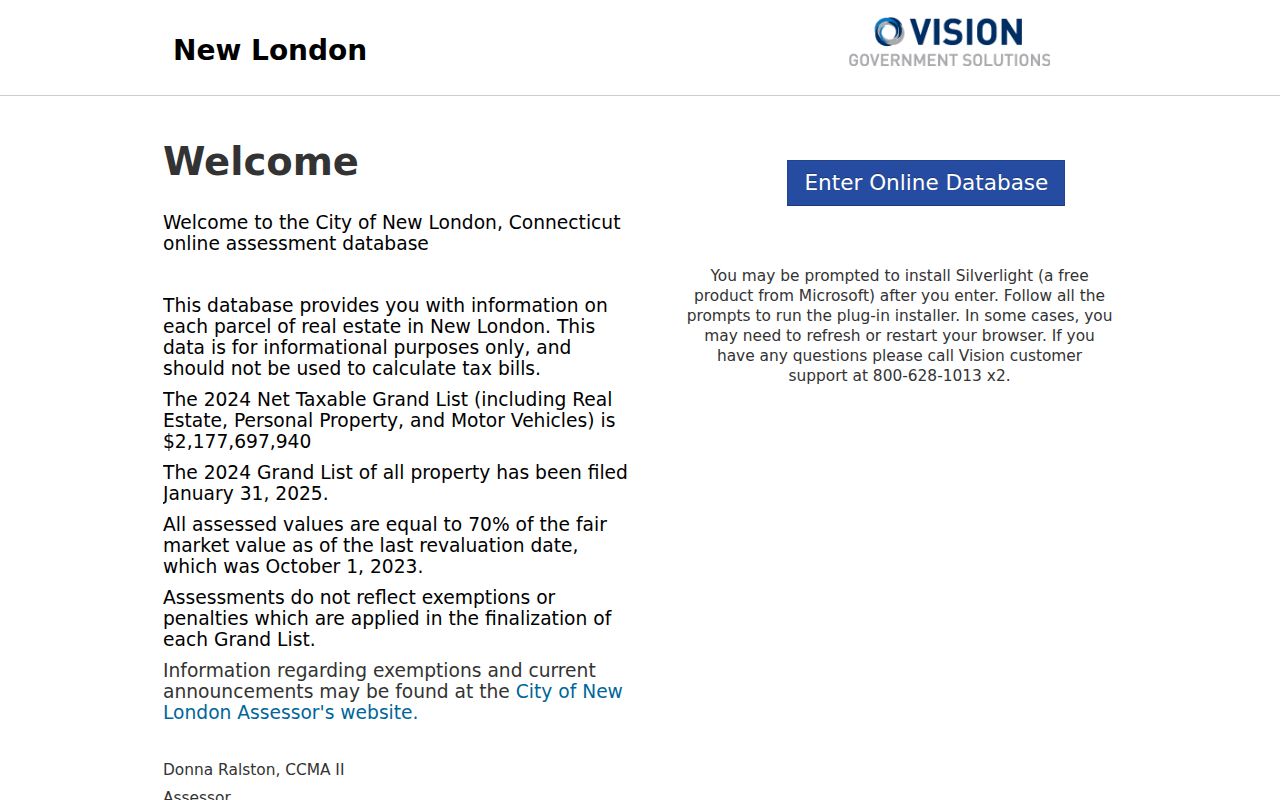
Assessment data carries city-specific dates and caveats. The separate Norwich Vision entry supports parcel-level Norwich assessment research, so keep its results tied to the city rather than generalized across the county.
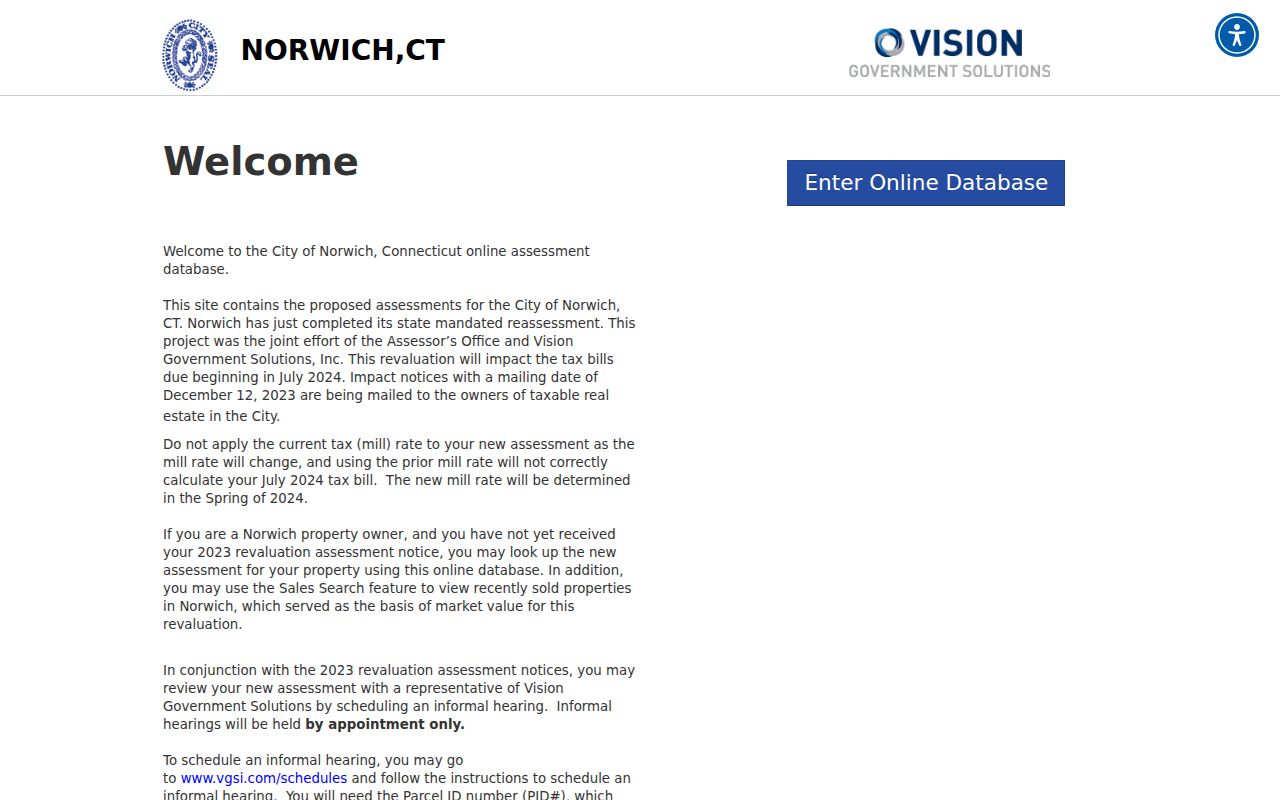
A Norwich parcel stays a Norwich matter. Confirm any Norwich result through Norwich deed and tax sources, not New London or Groton systems. Portal migrations leave gaps. A missing permit may rest in a legacy paper file, so ask the office for archived, superseded, and paper material by parcel and street.
What New London County Property Records Include
No single screen holds a complete property file. Each record type fills one role. Deeds build the recorded transfer trail, the assessment roll supplies values and ownership fields, tax accounts track billing, and maps or permits add geographic and development context across New London County.
| Record Type | What It Documents | Kept By | Access |
|---|---|---|---|
| Deeds and easements | Transfers, parties, dates, legal descriptions, restrictions | Municipal clerk | Town-specific portal, counter, mail, vault |
| Mortgages and liens | Recorded security interests, releases, notices | Municipal clerk | Index plus document copy |
| Assessment and tax | Roll owner, values, exemptions, bills, payments | Local assessor and collector | Municipal databases and offices |
| Plats and parcels | Lot context, identifiers, mapped lines | Clerk and GIS departments | Filed map and informational viewer |
| Permits and zoning | Applications, decisions, inspections, certificates | Municipal land-use/building office | Current portal plus archived-file request |
Match your question to the right record. Use New London County deed records for recorded ownership and encumbrances, property tax records for valuation and billing, and parcel maps for spatial orientation. Court dockets can add foreclosure, quiet-title, or lien context. A complaint or notice, though, is never a final title result.
Inside a Connecticut Assessor Card
A Groton property card packs a lot onto one page. It lists the current owner, mailing address, and property location. It also gives account and parcel identifiers, deed reference, sales, land and building values, construction attributes, sketch, and picture links. Several dates appear separately. Read them that way. A current owner date, a grand-list date, imagery year, and deed recording date are not interchangeable. That distinction matters in New London County property records. The Groton residential card shows these fields in place. An assessor card works best as an index. It points into the clerk's deed records, the tax roll, and the GIS map.
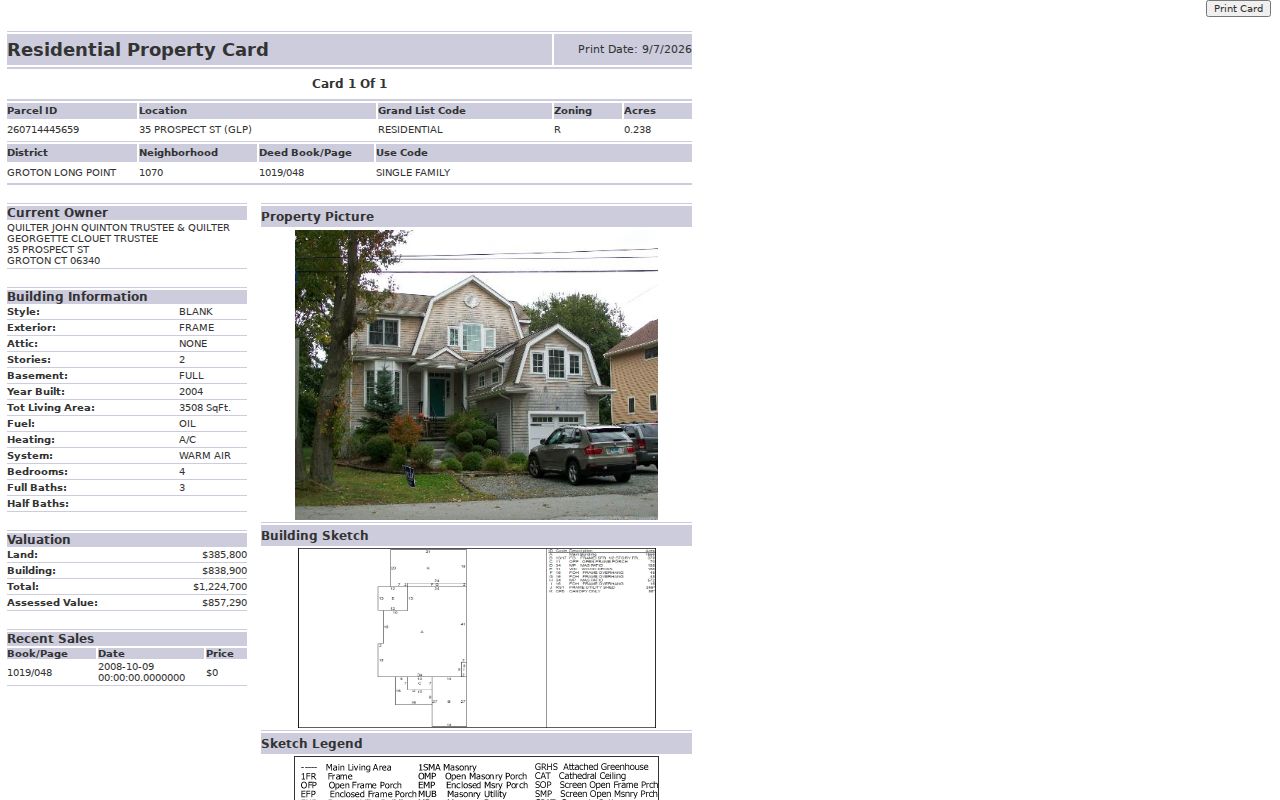
The card is a pointer, not title proof. Carry its exact parcel number and deed reference into the town clerk's deed index and the GIS map for confirmation.
Four useful terms
- Parcel ID
- A municipality's local key; there is no universal county format.
- Owner of record
- The name currently carried on an administrative roll.
- Assessed value
- Connecticut municipal assessment, generally set at 70% of fair market value.
- Plat
- A filed map that may show lots, streets, and dimensions.
Revaluation Dates Change the Meaning of Value
Revaluation dates change what a value means. New London finished a citywide revaluation for October 1, 2023, with notices mailed in December 2023 and the new values applied to July 2024 tax bills. Norwich cites a 2023 revaluation after its 2018 cycle. Those dates matter more than the bare number. An assessment from one base year is not a present sale estimate. A displayed $0 sale can mislead, too. It may reflect a nominal, public, exempt, or non-market transfer rather than a zero-dollar market value. Pull the deed and conveyance return before drawing any conclusion about price or ownership.
GIS Layers, Abutters, and Parcel Context
Groton's viewer takes many query types. Owner, address, street, and parcel searches all work. Selected features link straight to property cards, with layers for parcels, addresses, CAMA data, zoning, flood, historic, fire, tax, and development districts. SECOG adds a regional layer. The SECOG regional viewer offers geocoding, survey discovery, downloads, and abutter or buffer tools for New London County parcels.
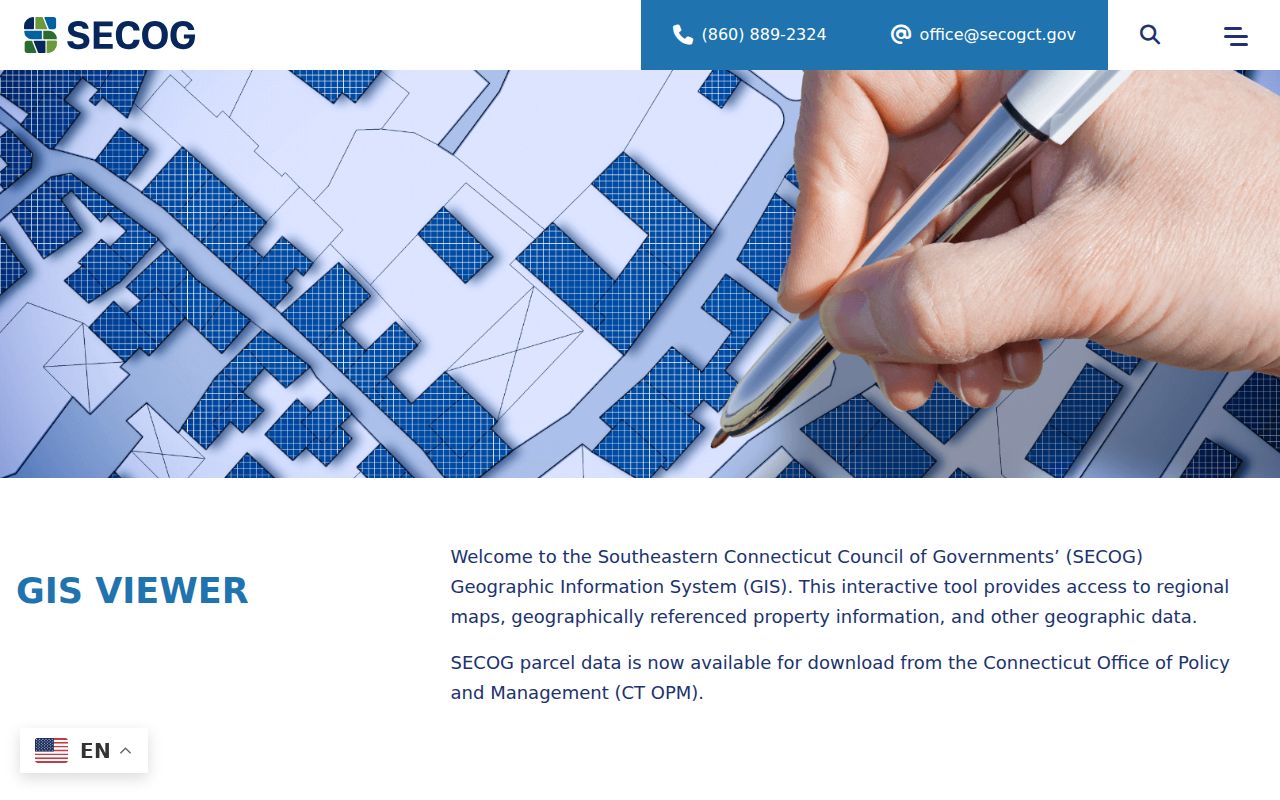
Mapped lines and generated abutter lists are informational only. For legal boundary questions in New London County, rely on a filed plat and a licensed survey instead.
Taxes, Installments, and Ownership Lag
Deeds, assessments, and tax bills run on separate clocks in New London County. The recorder's office files the deed. The assessor refreshes ownership on its own cycle. The collector bills whoever appears on the tax roll when the bill prints. New London and Norwich post their local installment schedules and penalties. Groton offers a taxpayer guide. Norwich flags a trap worth remembering countywide. An ownership change after late May may still miss the July bill. Tax responsibility legally attaches to the January 1 owner of record. So compare all three sources. The deed recording date, the assessment record, and the name on the bill can easily disagree. Each one is correct on its own terms. The New London tax inquiry gives the local bill route for that city.
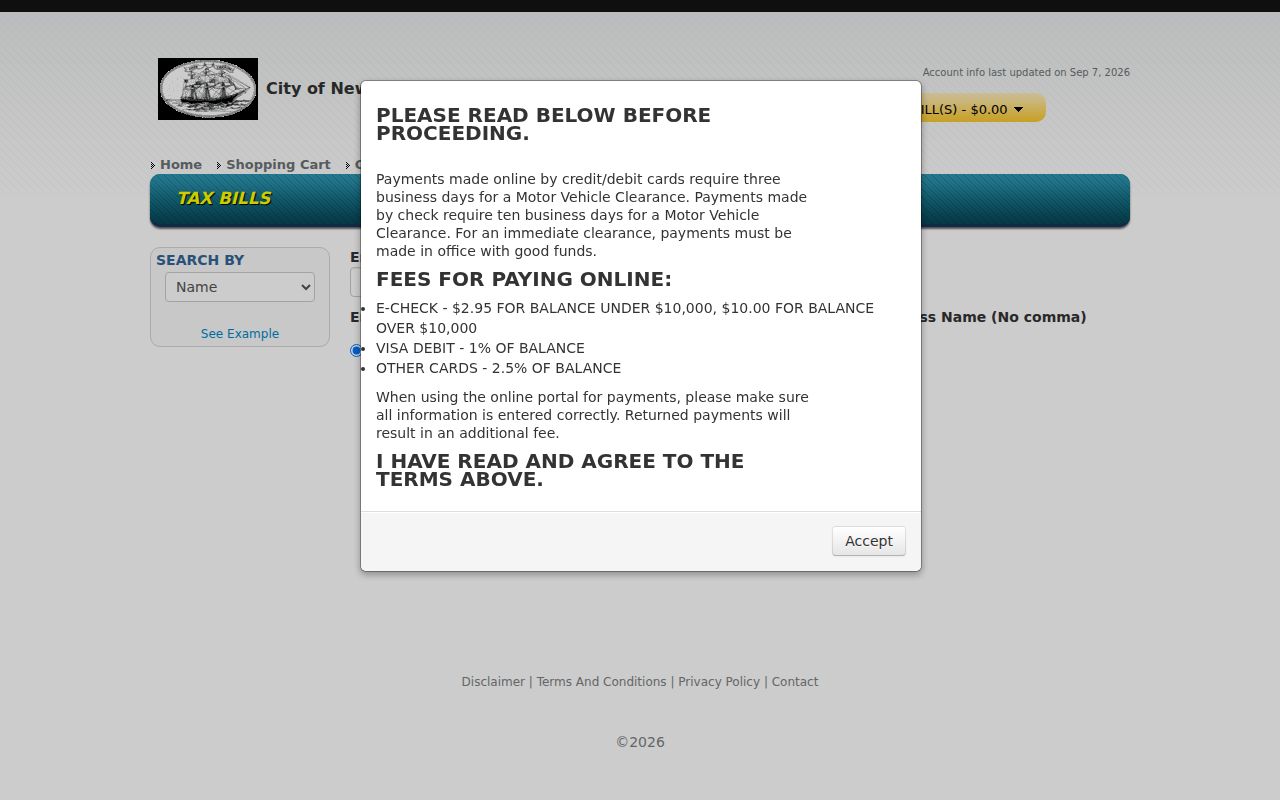
A printed balance is never the final word. Confirm any current amount with the collector, especially near a payment deadline or a transfer.
Recorded Deeds and the Backward Chain
Municipal clerks in New London County index land records by grantor and grantee. The chain runs backward from the newest owner of record. Copy the book and page from the latest deed. Grab the instrument number and the prior-instrument reference too. Then search that earlier party as a grantor. Repeat the climb. Cott and RECORDhub systems can filter by name, date, index, group, and document type. Each municipality decides how deep its online deed records go. New London posts its land-record access route. Norwich notes that its online land records sit behind a subscription.
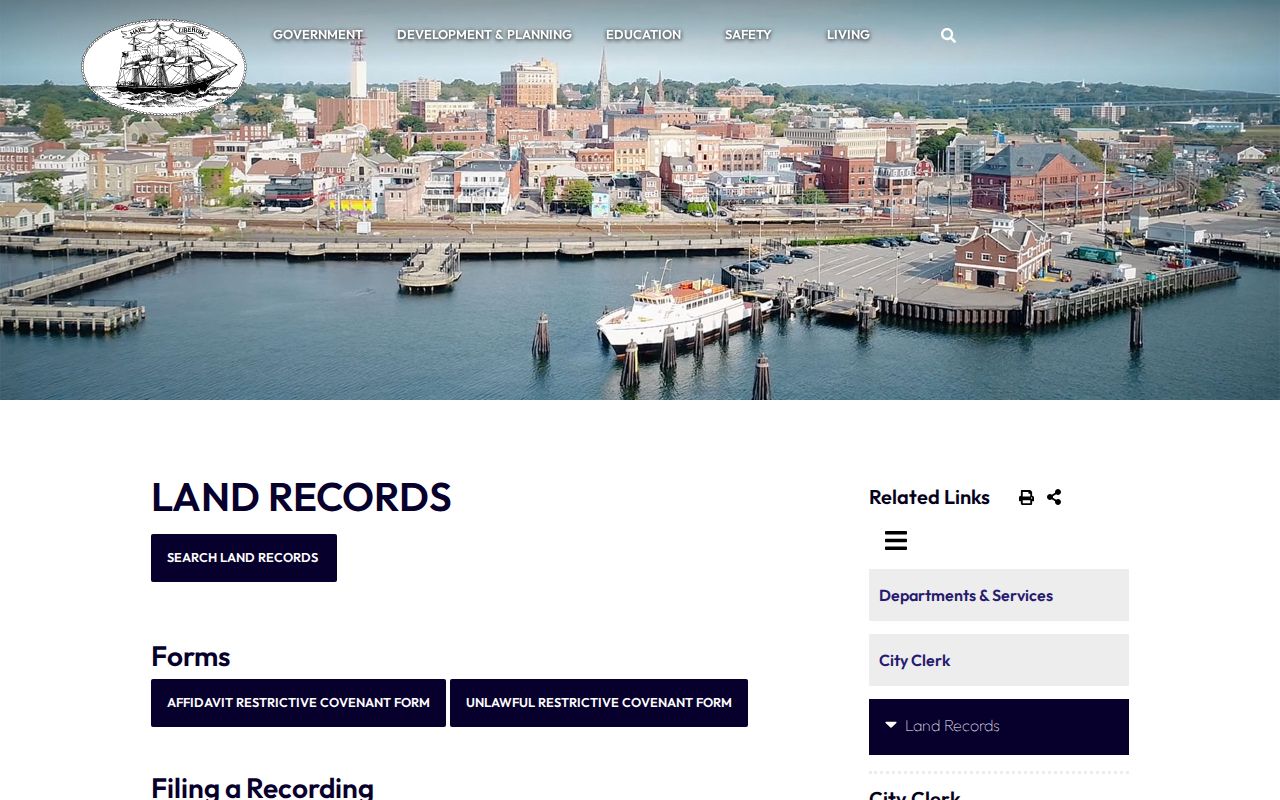
That clerk page reflects City of New London custody only. It is not a countywide deed index. Neither municipal site pins down a uniform start year for online records, and older volumes may live in the clerk vault, on microfilm, by mail, or through an FOI request.
Note: Preserve spelling variants, entity names, dates, and every prior book/page reference when reconstructing a deed chain.
Foreclosure and Lien Clues Beyond the Clerk
Land records hold far more than deeds. Mortgages, releases, mechanic's liens, tax liens, lis pendens, easements, and restrictions all sit in the clerk's books. Each can affect a title question. Connecticut Judicial Branch sources add party names, docket numbers, return dates, and dispositions. They also supply legal notices for foreclosure or quiet-title matters. Internet access to court documents depends on case type and date. A courthouse terminal or a clerk request fills the rest. Search Connecticut Civil Inquiry alongside the municipal records, not in place of them. Remember that a filed notice or claimed delinquency never proves how ownership finally resolved.
Historic New London County Research Paths
Older New London County property records live in several places at once. The Connecticut State Library holds archival indexes and historical collections. The New London County Historical Society offers free in-person research by appointment. It also provides paid staff research. The New London Public Library runs its own on-site procedure in its history and genealogy room. A digitized county history carries early tax and rate material. State Library preservation programs help explain why an old municipal book may survive on microfilm or in an archive rather than online.
Label every item in a house history. Call it an original record, an index, or a secondary source, and say which. Pair an old rate-list entry with a deed-book citation and a current parcel map. Never treat a historical source as proof of present title. The nineteenth-century county court indexes are another discovery aid. A name in a court file can point toward an estate, a boundary fight, a debt, or an ownership dispute. The indexed reference still has to be pulled and read in context. The Library of Congress catalog lists a New London County Historical Society serial published from 1890 to 1912. That serial is one more path into local institutions and property-era chronology.
When a Portal Search Ends
When a portal search stalls, go to the office that keeps the paper. Ask the clerk for older deed books, maps, microfilm, and certified copies. Bring roll and account questions to the assessor or collector. Request legacy permit files from the municipal land-use office. Use the courthouse for restricted or older court documents. The Connecticut Freedom of Information Act applies here. Under the Connecticut Freedom of Information Act, a request belongs with the agency that actually holds the record. Name the municipality, street, parcel number, parties, record type, and a useful date range.
Copy charges under FOI rules are generally capped at $0.50 per page. Certification and electronic-cost provisions can raise that figure. Recording and certified-copy fees follow different laws and office schedules, so confirm them before ordering.
Court material runs through the New London Judicial District and the Connecticut Judicial Branch. Internet availability varies by case type and return date. Probate files follow Connecticut's probate-district structure, not a county probate clerk. Historic land questions may belong at the State Library, a municipal archive, or the historical society. Some belong to a municipal archive. Others sit with the historical society. Ask for the exact record. That works far better than requesting everything on a property.
Permits and Zoning Add a Different Timeline
Building and land-use files tell a story deeds never mention. An addition, a use change, or a subdivision application can all appear in permit records and nowhere else. So can a variance, a wetlands review, an inspection, or a certificate of occupancy. New London routes many current land-use applications through OpenGov and building forms through CodePal. Norwich planning records use ViewPoint. Its building route runs on OpenGov. Groton points to EnerGov and CSS. Migrations often split new files from legacy ones. Search by address and parcel, then ask for archived paper and superseded applications.
A permit file can name applicants and owners stated on an application. It can also list contractors, hearing dates, decisions, conditions, and inspection events. None of it proves current title. A coastal New London parcel can also intersect zoning, flood, wetlands, historic, and incentive-housing layers. Map overlays show which office to call. The filed permit, restriction, or decision still controls the legal record.
Privacy Substitutions in Public Parcel Data
Connecticut runs an Address Confidentiality Program that gives qualifying survivors a substitute mailing address. Enrollment can also keep a real residence out of covered records. The state's parcel-data process adds its own layer of nondisclosure. In current-owner or mailing fields, the property location may stand in for a person's name.
Report a missing or substituted value exactly as it displays. It is not an error. Do not run the name through a people-finder service. Property research still works through the nonprotected fields. These include deed records, assessed values, maps, and the tax roll, within each source's rules and lawful-use limits.
Limits of New London County Property Records
New London County property records can tell you a great deal. Deed records show recorded transfers of ownership. The assessor sets appraised value. The tax bill and plat map round out the parcel picture. Filed encumbrances appear too.
The records cannot do everything, though. No document guarantees clear title. None settles a surveyed boundary or proves that a mailing address doubles as a residence. A court allegation in a filing is never a judgment. Connecticut's Safe at Home program and statewide suppression rules can substitute or withhold owner information. That privacy control deserves respect, not workarounds.
Lawful use. New London County property records support due diligence, boundary research, tax appeals, estate work, and civic transparency. They do not replace a title professional or surveyor, and owner information must never be used to stalk, harass, or harm anyone.